Big Mountains, Simple Dreams, and a Hard Walking Life
Nepal always feels like a land where the sky is too close and mountains talk in silence. Many people come here for simple trekking, but later they think about climbing peaks and crossing high passes because the view and feeling become addictive. These four adventures—Island Peak Climbing, Lobuche Peak Climbing, Mera Peak Climbing, and Everest Cho La Pass Trek—are the most famous routes where many trekkers change into climbers or high-altitude walkers.
These routes are not just normal walking paths; they are a mix of glacier, ice, rock, and very high-altitude air where breathing becomes slow and the mind also becomes strong. Sometimes the journey is easy at the start, but later it becomes tough and the body feels heavy, but the heart still wants to go up.
In this article, everything is explained in a simple way, not perfect language but real understanding, so the reader can feel like they are standing on a trail already.
Island Peak Climbing: Small Peak but Big Challenge Feeling
Island Peak climbing is very famous among beginner climbers who want their first experience of a Himalayan summit. It is also known as Imja Tse, but most people call it Island Peak because it looks like an island in the ocean of ice when seen from Dingboche Valley.
The route usually starts from Lukla and follows the Everest Base Camp trail, then turns towards Chhukung Valley. The path is a mix of stone trail, glacier walking, and a final steep ice wall, which looks scary but manageable with rope support.
Climbing day starts very early, like midnight or 1 AM. The weather is cold, and the wind is also strong sometimes. Climbers wear crampons and harnesses and slowly move on ice slopes. Some parts are fixed ropes, so hands also work with legs.
Read More: The 10 Most Beautiful Beaches in Africa
At the top, the view is very wide; you see Lhotse, Ama Dablam, and many white mountains standing like giant soldiers. Oxygen is low, but happiness is high; that feeling cannot be explained easily.
Island Peak climbing is not too technical but also not a simple walk in the park. It needs basic mountaineering skills, but many first-timers do it with guide support.
Some people feel tired, and some feel altitude sickness, but still most of them reach the summit because the path is well-guided and safe if the weather is good.
This climb teaches discipline, patience, and respect for mountains.
Lobuche Peak Climbing: More Technical and More Real Adventure
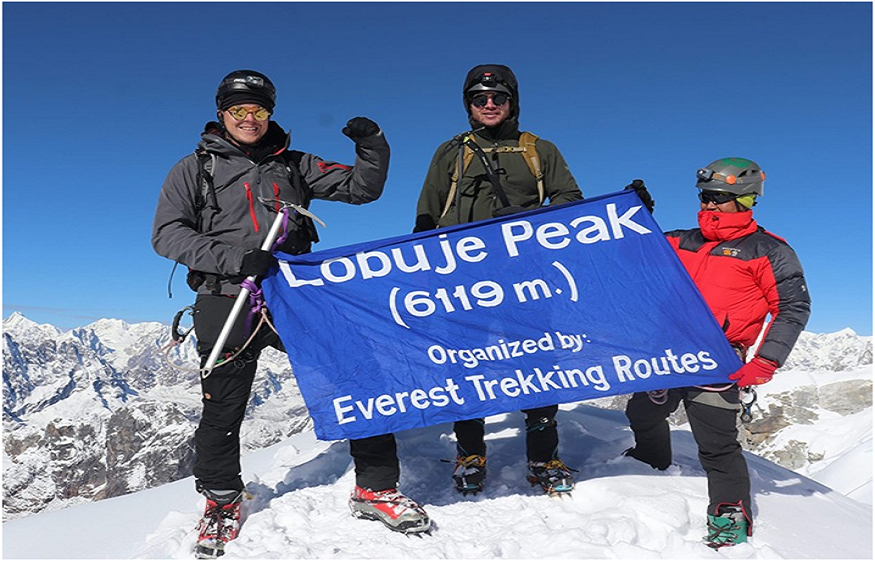
Lobuche Peak climbing is a little harder than Island Peak’s and gives a more serious climbing experience. This peak is near the Everest region and looks sharp and rocky from a distance.
There are two summits; Lobuche East is climbed more. The route starts the same as the Everest Base Camp trek to Lobuche village, then turns to the base camp of the peak. From there, climbing starts on glacial and mixed rock sections.
The first part is a rocky trail with a steep incline, then a snow ridge comes where rope is fixed by guides. Some sections are narrow, and the wind is also strong, so balance is very important.
Climbing Lobuche is more technical because there is more rock scrambling and less simple walking. Ice axe and rope skills are used more here.
When climbers reach the summit, the view becomes a 360-degree mountain circle. Everest, Nuptse, Pumori, and other peaks are visible clearly, like a white ocean around them.
The weather changes very fast in the Lobuche area, so timing is important. If the weather becomes bad, summit attempts stop immediately.
Many climbers feel mental pressure here because the terrain is unpredictable, but that also makes it a more real adventure. Not just walking, it feels like a real mountaineering step.
Lobuche Peak climbing is good for those who have already tried Island Peak or similar treks before.
Mera Peak Climbing: Highest Trekking Peak and Long Silent Journey
Mera Peak climbing is the highest trekking peak in Nepal, and it feels very different from Everest region climbs. It is located in the remote Hinku Valley, where the crowd is smaller and nature is more pure and silent.
The route is long, sometimes 12 to 18 days, depending on the plan. The trek starts from Lukla but goes toward quieter forests and river valleys instead of the busy Everest trail.
Read More: Creating Unforgettable Journeys for Any Size Group
The climbing style is less technical, but very high altitude is the main challenge. The Mera Peak summit is above 6400 meters, so oxygen is very low and slow movement is necessary.
The trail goes through jungle, suspension bridges, yak pastures, and then a glacier camp. Base camp and high camp are set before the summit push.
Summit day is very long. Start before sunrise and walk on the glacier for many hours. Rope is used in the final section, but the slope is not very steep like Lobuche or Island Peak.
From the top of Mera Peak, the view is extremely wide. Everest, Makalu, Cho Oyu, Lhotse, and Kanchenjunga area peaks can be seen in clear weather. It feels like standing on the top roof of the world.
But climbing is not easy in an endurance way. My body gets tired because of the long approach and cold nights. Some trekkers feel lonely because the route is quiet and there are not many people around.
Mera Peak climbing is best for those who want high-altitude experience but also peace and isolation from busy trekking trails.
Everest Cho La Pass Trek: Ice Pass Adventure Between Two Valleys
The Everest Cho La Pass Trek is not peak climbing but a very tough high-altitude crossing that connects the Everest Base Camp region with the Gokyo Valley. It is one of the most dramatic trekking routes in Nepal.
Routes usually start from Lukla and go through Namche Bazaar, Tengboche, Dingboche, and the Everest Base Camp area. After that, instead of returning the same way, trekkers cross Cho La Pass and enter Gokyo Valley.
Cho La Pass is a high glacial pass around 5400 meters. It is steep and icy, and sometimes frozen rock steps make walking very slow. Microspikes or crampons are often needed.
Morning starts very early because the weather becomes risky after midday. Wind can be strong, and visibility can drop fast.
When crossing passes, one side is Everest Valley and the other side is Gokyo Lakes Valley. Ice and snow everywhere, and sometimes climbers feel like they are walking inside a frozen world.
After passing, the trail goes down to the beautiful Gokyo Lakes area, which is calm, blue water surrounded by white peaks. This contrast makes the journey very special.
This trek also includes an Everest Base Camp view, Kala Patthar sunrise, and Gokyo Ri viewpoint if included.
The Cho La Pass trek is not for beginners because it needs good stamina, balance, and weather understanding. But the reward is very high because it combines two famous valleys in one route.
Final Thoughts: Mountains Always Teach More Than Expected
All these four adventures—Island Peak Climbing, Lobuche Peak Climbing, Mera Peak Climbing, and Everest Cho La Pass Trek—are different levels of Himalayan experience.
Some are climbing peaks with rope and ice, some are long trekking with high passes, but all share the same thing: strong mind, slow step, and respect for altitude.
Weather change, oxygen drop, and tired legs are always part of the journey, but the view, silence, and personal achievement make everything worth it.
People come thinking about their destination, but they return to the remembering process. That is the real beauty of the Nepal mountains: not only the summit but also every step between the valley and sky.
Contact Details
Everest Trekking Routes Pvt. Ltd.
16 Khumbu, Nayabazaar, Kathmandu, Nepal
Mobile: +977-9843467921 (Rabin)
Email: [email protected]
URL:– www.everesttrekkingroutes.com